Can an unmarried partner join Spain’s Digital Nomad Visa without registering as a couple?
Last updated: 2026-10-13
Reading: 7 min

See how to turn an unregistered relationship into a clear, evidence-based family application.
Table of contents
Quick summary
- A registered domestic partnership is not the only route: an unregistered partner may qualify by proving a durable relationship.
- UGE guidance normally expects at least one continuous year of cohabitation immediately before the application but couples with a child together do not need to prove the full year, but must prove current stable cohabitation.
- Evidence should be consistent across the relevant period, and an unregistered partner may need separate private health insurance.
- A qualifying family permit allows the partner to work in Spain without the Digital Nomad Visa holder’s employment restrictions.
Spain’s law covers more than married couples
Article 62.4 of Law 14/2013 allows the spouse or a person in an equivalent relationship, qualifying children and dependent parents to accompany or later join an international teleworker. Family members may apply at the same time as the principal applicant or subsequently. If the applications are filed together, the law provides for them to be decided together.
The important point is that “unmarried” does not mean “ineligible.” A public domestic-partnership registration is useful evidence, but the official Unidad de Grandes Empresas (UGE) instructions also recognise an unregistered stable couple. The practical issue is therefore not the absence of a marriage certificate; it is whether the relationship can be proved to the required standard.
What must an unregistered couple prove?
The UGE family-document guidance treats a relationship as durable where the couple proves at least one continuous year of marital-type cohabitation. For an unregistered couple, that year should immediately precede the application and may be proved by any legally admissible evidence.
UGE gives practical examples and suggests showing at least two circumstances such as joint bank accounts, registration at the same address, a jointly held lease, mortgage or home, or joint ownership of a business. These examples are not a magic checklist. The documents should form a credible timeline showing that the couple actually shared a life, rather than merely producing two recent documents with both names.
A useful file might combine a joint lease covering the full period, official address records, regular joint-account statements and insurance or tax documents showing the same home. Where US documents are state- or county-specific, their legal form and the need for an apostille or translation should be checked before filing.
What changes if the couple has a child together?
A shared child creates an important exception to the usual one-year evidence period. UGE states that the couple does not need to prove a full continuous year of cohabitation when they have a child together. They must provide the child’s civil-registry birth record and still prove that the relationship and stable cohabitation exist when the application is filed.
This does not mean that a birth certificate alone automatically resolves every point. It proves common parenthood, while the rest of the evidence should show the continuing relationship and present household circumstances.
Can the partner apply later?
Yes. Law 14/2013 allows eligible family members to apply jointly, simultaneously or successively. A partner can therefore join after the principal Digital Nomad Visa or residence authorisation has been granted.
A later application needs current evidence. UGE guidance asks the principal holder to show sufficient resources for the enlarged household, using documents such as the work contract, the previous three months of payslips or invoices and matching bank evidence. If work-derived income falls below the applicable minimum, liquid savings or other liquid income may be used to cover the difference for the authorisation period, subject to the authority’s assessment.
The official UGE Digital Nomad FAQ sets the financial benchmark at 200% of Spain’s monthly minimum wage for the principal applicant, an additional 75% for the first family member and 25% for each further member. Because the minimum wage can change, the calculation should use the figure in force when the application is prepared.
The overlooked insurance issue for an unregistered partner
UGE draws a distinction that can surprise couples applying from Spain. When a domestic partnership is not entered in a public register, the partner does not acquire beneficiary status through the principal holder for Spanish Social Security healthcare on that basis. UGE therefore requires that partner to demonstrate private health insurance.
The published instructions reject travel insurance, reimbursement-only policies, copay policies and policies with waiting periods. This issue should be checked early: evidence that proves the relationship does not automatically prove acceptable healthcare coverage.
Can the accompanying partner work in Spain?
Yes. The official UGE FAQ states that family residence authorisations under Law 14/2013 permit work without restriction, whether employed or self-employed. The partner is not required to qualify independently as an international teleworker and is not limited by the principal applicant’s foreign-company rule.
That is a meaningful difference between the two permits. The principal applicant must continue meeting the Digital Nomad Visa conditions, while the family member’s authorisation carries its own right to work. As the spouse of a DN you have full work rights in Spain, more than your spouse who is limited to 20% of income from remote work. You however can work in a store, remotely, part/full time or open a business!
A practical filing sequence
First, decide whether the partner will apply with the principal applicant or later. Next, build a month-by-month relationship timeline and select documents that cover the whole relevant period. Obtain the required civil-status and criminal-record documents early, then arrange apostilles or legalisation and accepted Spanish translations where applicable.
Finally, recalculate the household’s financial requirement and confirm the partner’s health-cover route. Consular visa applications and residence-authorisation applications filed from Spain have different filing mechanics, so the checklist must match the chosen route and competent authority.
How Anemoss can help
ANEMOSS ASESORÍA JURÍDICA S.L. can assess whether a couple’s evidence supports the family route, identify gaps and coordinate the document set with the principal application. See the Anemoss Digital Nomad Visa service or start an application for an individual review. The consulate or UGE makes the final decision.
Common mistakes
- Assuming that only marriage or a registered domestic partnership can qualify, and therefore failing to present evidence of an unregistered durable relationship.
- Submitting two recent joint documents instead of a coherent record covering the relevant one-year period.
- Treating a shared child as proof of everything: it removes the normal one-year cohabitation requirement, but current stable cohabitation must still be shown.
- Assuming the unregistered partner automatically receives healthcare as the principal holder’s Social Security beneficiary.
Would you like us to manage it for you?
We are Andrea and Marbod. At Anemoss, we combine legal strategy and technical execution to manage your case from start to finish.
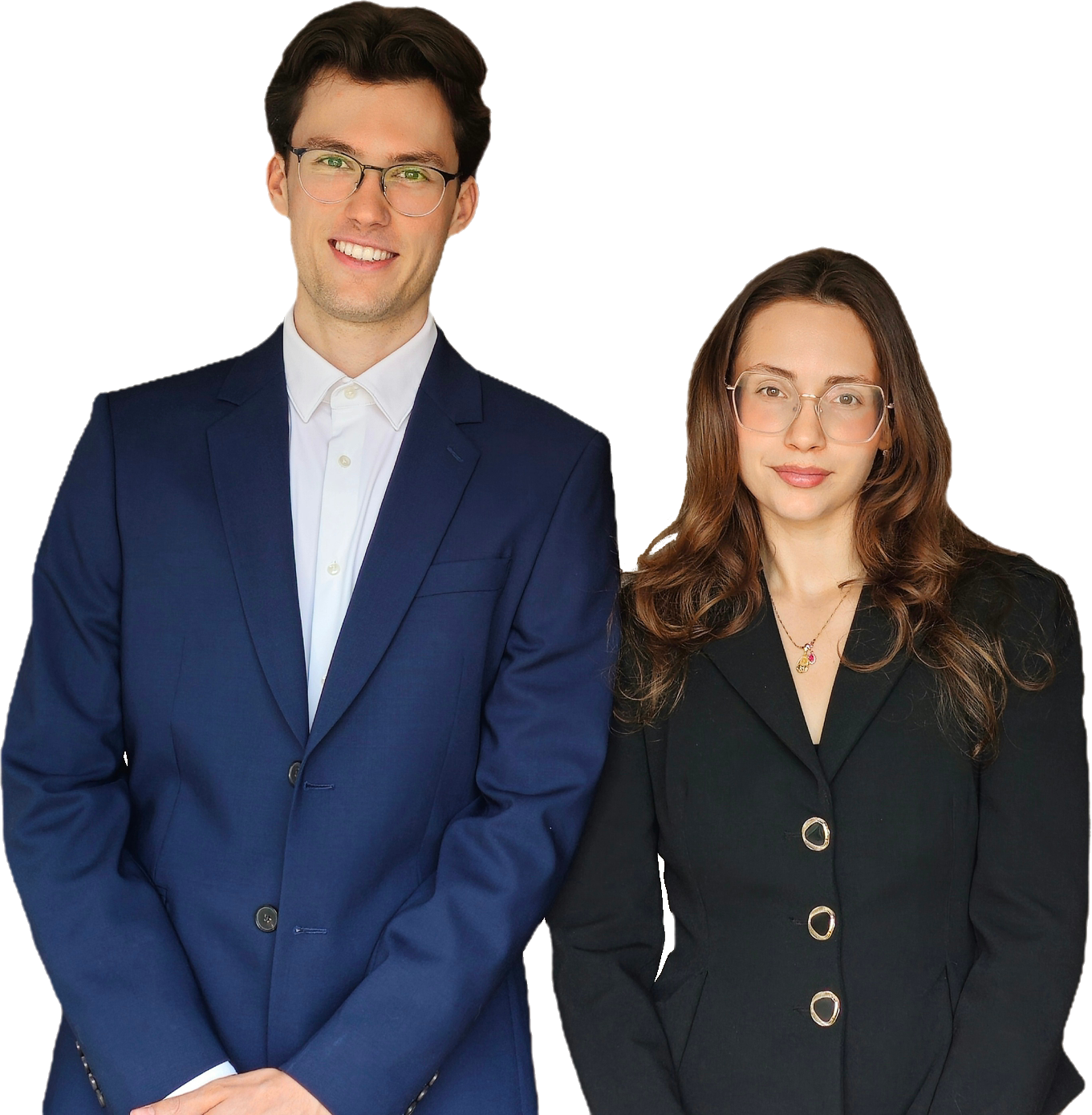
We are personally involved throughout your case, from the initial analysis and action plan to ongoing support until the process is complete.
Questions? Contact us
Frequently asked questions
Must we register as domestic partners before applying?
Not necessarily. UGE accepts an unregistered stable partnership if the required durable relationship is sufficiently proved. Registration can simplify one part of the evidence, but it does not replace the other family-member requirements.
Does my partner need a separate Digital Nomad job?
No. The partner applies as a qualifying family member and does not need to meet the international-teleworker employment test independently. Once authorised, the family permit allows employed or self-employed work in Spain.
Can my partner apply after I receive my permit?
Yes. Family applications may be filed later, but the relationship, finances, health cover and other required documents must be current and sufficient at that time.


There are no comments yet. You can be the first person to comment.